|
For Therapists:Tapping into the Creative Unconscious through Writing
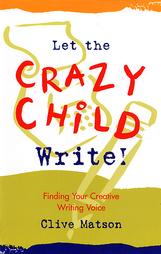
Let the Crazy Child Write! by Clive Matson |
Approved for 5 hours of continuing education
Let the Crazy Child Write!
LET THE CRAZY CHILD WRITE! celebrates the role of the creative unconscious or Crazy Child in stories, poems, plays, and essays. Examples show how the Crazy Child informs our writing and gives it texture and flair, and a plethora of exercises allow you to demonstrate for yourself the power of the knowledge in your own body. Topics covered are Image Detail, Slow Motion, Hook, Persona, Point of View, Dialogue, Plot, Narrative Presence, Good Cliches, Character, Surrealism, and Resolution.
Once you have a first draft, the next step is shaping your writing into its most powerful form. LET THE CRAZY CHILD WRITE! shows you how easy it is to follow the "kindergarten rules" of the syngenetic workshop. These guidelines honor your original, primary impulse to write and make rewriting a positive, fulfilling experience. You can use them with your internal editor, your writing partner, your writing group or your clients.

is approved by the:
www.psychceu.com
maintains responsibility for the program.
how it works
Due to the wonders of technology, the minute you submit your order over our secure line, it is encrypted, and processed safely and securely by Authorize.net, a secure web processor. Or, if you prefer, call us toll-free 888-777-3773.
Learning Objectives:
Students will:
Understand the role of the creative unconscious in writing
Become aware of the contract between critical and creative voices
Learn how to alter unconscious contracts with oneself or with one's clients
Explore the variety of healing and expressive modes of writing
Learn techniques to assist clients getting in touch with their authentic selves
Table of Contents
Acknowledgments
Preface
The Crazy Child
The Crazy Child's Goal
Crazy Child, Writer, Editor
All You Need Is the Urge to Write
HOW TO USE THIS BOOK:
Discussion; Exercise; Workshop; Practice; Work Hard and Have FunChapter One: Image Detail
How Image Detail Works
Powerful Image Details
Images Other Than Pictures
Repeated Image Detail
Image Detail in Stories
Imaginary Image Detail
Image Detail in Poems
Image Detail in Plays
Image Detail in Essays
Image Detail and the Crazy Child
Exercise Interview; Truth or Fiction; Writing Your Notes
Workshop The Syngenetic Workshop; Read Out Loud and Take Notes; The Author's Job; The Listener's Job
Practice New Journalism; Alternatives
Chapter Two: Slow Motion Kinetic Detail
Slow Motion in Stories
Slow Motion in Poems
Slow Motion in Plays
Slow Motion in Essays
Reading Is a Physical Process
Writing Is a Physical Process
Slow Motion and the Crazy Child
Exercise Accurate to the Split Second; Slow Motion and Journalism
Workshop Suggestions for rewriting; Who Is Correct?
Chapter Three: Hook
Crazy Child Hooks
Plot and the Hook
Hooks in Stories
Hooks in Poems
Slow Hooks
Hooks in Plays
Hooks in Essays
Exercise Germs; Silly Hooks; Expanding the Germs
Workshop Something Extra; Listen for Hooks; Clunky Suggestions
Practice Beginning the Action; Alternative; Not Knowing Where You Are Going
Chapter Four: Persona Writing
Persona and the Author
Persona in Stories
Talent and Persona
Persona in Poems
Persona in Essays
Persona in Plays
Persona and the Crazy Child
Exercise Taking-Off Points; Getting Unstuck; Crazy Child and the Body; Crazy Child Writing Promotes Good Health; Awful- Feeling Crazy Child Writing
Workshop Doors
Practice Alternative; Listen to the Darkness; Find a Door; Crazy Child and Political Correctness
Chapter Five: Point of View
Persona and Point of View
Crazy Child and Point of View
First-Person Point of View
Third-Person Point of View
Omniscient Point of View
Shifting Third-Person Point of View
Point of View in Poems
Point of View in Essays; Point of View in Plays
Exercise Camera-on- the-Shoulder; Crazy Child Options
Workshop Apple
Practice Point of View and Consistency; Alternatives
Chapter Six: Dialogue
Definitions of Dialogue
Dialogue and the Crazy Child
Dialogue and Communication
Stairwell Wit; Dialogue in Stories
Dialogue in Poems; Dialogue in Plays
Dialogue and Miscommunication
Dialogue in Essays
Framing Dialogue
Precision in Dialogue;
Exercise Dialects and Accents; Dialogue and Listening
Workshop Listening to Point of View; Listening to Dialogue; The Weaver and the Weaving
Practice Point of View and Dialogue; Choosing a Point of View; Write Different Stances
Chapter Seven: Plot
Hook, Issue, Resolution
Plot and the Crazy Child
Plot as Obstacles
What Is the Issue?
Plot in One Sentence
Plot in Poems
Plot in Plays
Plot in Essays
Plot as Magnet
Exercise Plot Germs
Workshop Listening to Plot Germs; Listening to Dialogue Again; What Does It Need?; Mini-Beats; Check with the Author
Practice Missing Valuables; Image Detail, Slow Motion, Persona, Point of View, Dialogue; Follow the Magnet
Chapter Eight: Narrative Presence
Persona, Point of View, Narrative Presence
Attitude
Steeped in the Narrator's Mind
Crazy Child and Narrative Presence
Distancing
Distancing and the Surface
Narrative Presence in Poems
Narrative Presence in Plays; Narrative Presence in Essays
Voice and Stride
Exercise Twelve-Sentence Childhoods; Hidden Connotation
Workshop Listening to Plot Again; What Is the Piece About? Presenting Options; Let the Author Speak;
Practice First Rewrite
Chapter Nine: Good Cliches
Cliches and the Crazy Child
Going into Cliches
Twisting Cliches
Gushing Cliches
Cliches and "Like"
Cliches in Plays
Cliches in Essays
Have No Fear
Cliches and the Editor and the Writer
Exercise Crazy Child, Writer, Editor; Write the Next Word; Gushing Cliches and Twisting Cliches; Trail of Cliches
Workshop Workshopping the Rewrite; Baby Steps
Practice Anger and the Crazy Child; Amping the Attitude and Pushing the Envelope
Chapter Ten: Character
A Few Traits Convey Character
Character and Belief
Character, Point of View, Narrative Presence, Persona
Character and the Crazy Child
Character and Action
Character and Internal Dialogue
Character and Image Detail
Character and Quirks
Character in Plays
Character in Poems and Essays
Steeped in Character
Exercise Character Before and After; Get Wild
Workshop Unpleasant Characters; The Complete Crazy Child Exercise; Give More
Practice Dreaming into Character; Character and Personal Issues; Mix and Match
Chapter Eleven: Surrealism
Surrealism and the Crazy Child
Surrealism and Imagining
Surrealism and a Different Universe
Bold Surrealism; Surrealism and Emotion
Surrealism in Essays
Surrealism in Plays
Locating the Surreal
Exercise Dream Logic; An Object Becomes Surreal; Crazy Child as Big Workshop Apple Again; Real Time; Bracketing
Practice Synchronicity; Editor, Writer, Crazy Child; Synchronicity in Progress
Chapter Twelve: Resolution
Surface and Undercurrent
Crazy Child and Resolution
Resolution in Poems
Resolution in Stories
Resolution in Plays
Resolution in Essays
Premodern, Modern, Postmodern Resolutions
Steeped in the Issue
Exercise Freeze-Frame; Editor, Writer, Crazy Child Confrontation
Workshop Say Just Enough; Bring the Issue Into the Foreground; The Rake; Move the Target to Hit the Arrow; Nitpicky Remarks
Practice Writing in Reverse; Five Steps of Creation; Poetic License; Continuing Your Writing
Preface: The Crazy Child Beginning my studies the first step pleas'd me so much... The Crazy Child is an aspect of your personality that is directly linked to your creative unconscious. It is the place in your body that wants to express things. It may want to tell jokes, to throw rocks, to give a flower to someone, to watch the sunset, to make up insults, to sit quietly — or to play video games. All these impulses, all the thrilling, scary or ordinary ones, come from your Crazy Child. The Crazy Child is also your connection to the past. Everything in your genetic history, your cultural history, your familial history, and your personal history is recorded in your body — in your nervous system. Your Crazy Child has direct access to it all. Everything you have done, and everything that has been done to you, is in its domain. I experience my Crazy Child as energy coming up from my feet, through my torso, and up the back of my neck. It connects me to the Goddess, to God, to the earth, to space, to darkness, to my senses, to my dreams, and to sex. All the exciting and all the dark stuff simmering or roaring through my body is the Crazy Child. Your "creative unconscious," your "creative source," and your "Crazy Child" are close cousins. I often use the terms interchangeably, but "Crazy Child" has the virtue of sounding playful and wild. When you address it as your Crazy Child, your creative unconscious may feel invited to come out, make itself comfortable, and start writing. The Crazy Child's Goal The Crazy Child's goal is to express itself — to have some kind of existence in the world. We spend so much of our lives telling it to behave or to shut up and go away, that it probably feels unappreciated. The Crazy Child would like to be heard. Writing is a safe way for this part of you to be in the world — or a relatively safe way. If your Crazy Child wants to rob a bank, writing about a robbery is more prudent than doing the robbing. If it has an insight that makes you vulnerable, you can write it in a private diary. When the Crazy Child writes, it's a raw, truthful part of you that reveals itself. It has not been civilized. My Crazy Child knows what is happening, in spite of all contrary messages. It knows what it's like to live in my neighborhood, in this culture, in this time, and in my body. My Crazy Child is the real me — or at least an essential, energetic part of me. The Crazy Child coils tension into a story, loads a poem with gripping images, unfurls a play's or novel's plot ratchet by ratchet, and punches up an essay's most dramatic point. The other voices, the Editor and Writer described below, are valuable aids to writing. But the Crazy Child — your creative unconscious — is the source. Crazy Child, Writer, Editor The Crazy Child has two companions: the "Writer" and the "Editor." These three voices are much the same as the Freudian id, ego, and superego, and much the same as the child, adult, and parent of Transactional Analysis. Sometimes the voices get along well, and sometimes they are unruly antagonists. The Crazy Child is equivalent to the child or the id. The id, literally, means "it" — but the word has a darker flavor. Some German parents, when they want to discourage their children from going out at night, say the "id" is outside, just as we would say "bogeyman." The Crazy Child has some of that forbidden aura. The Editor is the superego or the parent — the "should" voice. It analyzes and criticizes our writing, and is intelligent, well-read, and thinks it is civilized. Its judgments can be helpful, harsh or anywhere in between. The Editor might say you are right on schedule and doing well or it might tell you to get a real job. The Writer is the voice that negotiates and plans, and it strives for coherence and reason. The part I am thinking with now is the Writer, which is the same as my ego or my adult. I use it to organize this book, to plan my writing life, and to schedule my lunch breaks. If you are reading this with your Writer, you are probably absorbing it carefully. Your Editor could be assessing it at the same time, and possibly deciding that you're not good enough for this book or that Let the Crazy Child Write! is too elementary or far too strange — or it's a perfect match. Your Crazy Child will have its own feelings: it might be scared, irritated, awed or delighted. All aspects of writing are expressed in these voices. One of them — Crazy Child, Writer, Editor or some combination — is chattering at every moment. When they quarrel, the Editor often tells the Crazy Child it's stupid or shy or sappy. These quarrels can stop your writing cold. Let the Crazy Child Write! will help your Editor and Writer understand how your Crazy Child is the vital force behind your creativity. They will learn to honor and tune in to your creative source. When they are getting along, the Editor and the Writer respond warmly to the Crazy Child. All You Need Is the Urge to Write Let the Crazy Child Write! is for anyone who wants to write. You may have no experience whatsoever, or you may have written as a child and are interested in trying it again. Perhaps you keep a journal or have begun stories, poems, plays or essays on your own. Your job might involve some writing, such as preparing technical manuals or reports or briefs, and you are curious about creative writing. You may even have taken a class or read an inspirational guide, and now you want to explore the nuts and bolts. All you need is the urge. Let the Crazy Child Write! will help you develop a connection between writing techniques and your unique creative source. You will learn, step by step, how to tap into your creative unconscious — your Crazy Child — and its indispensable, dynamic knowledge of writing. How to Use this Book Let the Crazy Child Write! is meant to be read on your own or with a writing group — either way. The chapters build one upon another, so it's useful to read them in sequence. But you don't need to; you might learn as much by following your nose and skipping around. Each chapter introduces a writing technique. A discussion explores the technique, an exercise gives you a taste of it, and a workshop section, which is optional, suggests how to give and receive feedback. Each chapter closes with a short writing practice that gives you experience with the technique. Discussion Every chapter begins by discussing a technique of creative writing. The focus is on how that technique works in conjunction with the nervous system, and why it is important to creative writing — both to writers and to readers. Examples show how the technique functions in stories, poems, plays, and essays, and how the energy and pungency of the technique arises automatically and naturally from our creative unconscious. That mischievous Crazy Child heightens our skills because it already wields them. The discussion will indicate what you know, but don't understand that you know. Learning creative writing is first a matter of bringing writing techniques into awareness. They are alive and thriving in the realm of the Crazy Child. Exercise Every chapter presents an exercise that gives you hands-on experience with its topic. You can do the exercise on your own or, if you have a workshop, do it during the workshop meeting. Do it quickly and with as much exuberance as you can muster. Don't worry about how well you are writing. There is no wrong way to do any of the exercises — except to not write at all. You can do the exercise in a half hour. You can lie on your bed, prop yourself on the stairs, lean against a tree, or sit in a cafe with other people or by yourself, however you are comfortable. My favorite spot is at my local daycare center, in a tiny room painted like a magic forest. In general, follow the method suggested by Natalie Goldberg in her book Writing Down the Bones: keep the ink flowing. If you use a computer, keep those fingers wiggling. If you use a pen, keep that pen on the page, and keep it moving. It doesn't matter how good the writing is. It matters only that you are writing. You're retrieving some of the natural skill your creative unconscious has, and acquiring a feeling for it. That's the goal. Workshop You may want to wait until you feel confident as a writer before you join a workshop. You can read this book on your own and ignore the workshop sections, or you can peruse them for more information about writing. If you've already written pieces you like, or if you just feel daring, consider starting a group. A workshop consists of two or more like-minded people who give each other feedback on their writing. This can be done in person, by mail, or by electronic mail. Workshops generally function best, however, when everyone is physically present. You find out two things in workshops: how well your writing is going, and what steps to take next. These are surprisingly difficult to learn on your own. Your Editor often has too many suggestions or too many hostile judgments. A workshop will provide you with constructive insights in a way that you'll be able to hear — even if your Editor and Writer are being contentious. When you are ready, suggest to a suitable friend that the two of you start a workshop. If a friend doesn't come to mind, post a note on a community bulletin board, advertize in a local paper, or make an announcement at a reading. Once you find someone, you can both invite friends. You may be surprised how many people want to write. Decide on a regular meeting schedule and ask that members commit for a specific number of sessions. At each meeting, plan to hear everyone's practice piece, written since the last meeting, and plan to write and listen to the exercise for the chapter you are reading. It may take several sessions before your group gels, so be patient; the ideal is for each person to feel engaged and encouraged about writing. A workshop's first concern is to establish a safe atmosphere. When it's well on track everyone gets excited and stimulates better and better writing in each other. You have then created a "fermenting brew." Several ground rules, outlined on page 17, help generate this brew. I call the guidelines "kindergarten rules" and indeed they seem childlike, but they have a complex history. They have evolved over twenty years in my workshops and in other workshops around the country. The underlying concepts were first presented in 1973 by Peter Elbow in his book Writing Without Teachers. The kindergarten rules constrain the Editor from giving heavy criticism that can stop people from writing. The ground rules establish a "syngenetic" workshopþone that focuses on understanding the writer's primary impulse. The syngenetic workshop supports what each person is doing well, and cultivates each person's unique strengths. Practice The practice section gives suggestions for a longer written piece that develops each chapter's technique. The exercise gives you a quick hit and the practice expands your skill. Often the practice is an extension of the exercise. I will present several alternatives, and you should choose whichever one excites you. The point of writing a practice piece is to solidify what you have learned before you go on to the next topic. It could take two to three hours. You might write more quickly or you might take ten hours or more. There is nothing wrong with either. As you write, follow the spirit of the guidelines — whether you choose one of the alternatives or devise something on your own. If you write three to five double-spaced pages or the equivalent, you are doing enough to benefit. More is not harmful. We need to practice a new skill many times before we can do it well. The human nervous system needs to repeat a technique some two thousand times before the skill can be performed without thought. The practice gives you a start on those two thousand repetitions. Work Hard and Have Fun Working with Let the Crazy Child Write! is a win-win situation. No matter how small or immense your writing career becomes, you will benefit from this book. You will discover how very interesting writing can be, and you will learn about creating detail, characters, dialogue, action, and more. Let the Crazy Child Write! will also help you in writing letters, memoirs for your family, school papers, and even with the writing you do at your job. You will be able to write more clearly and more vividly, and enjoy doing it far more than you did before. You might also discover that you want to make writing an important part of your life. Since Let the Crazy Child Write! develops basic skills and nourishes your creative source, it gives you a solid foundation for a writing career. You will discover the unique power in your own psyche and body. You will find out how well your Crazy Child can write. |
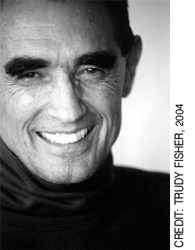
Clive Matson began free-lance teaching in 1978. He was captivated by David Wagoner's |
Take the test online!
Print out your own certificate!
This course counts as a 'regular' (not self-study) course by the CA BBS!
© 2026. www.psychceu.com. all rights reserved
Paintings by Vincent van Gogh