|
|
Clinical
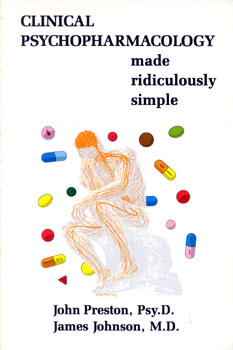
Psychopharmacology by |
This course meets the qualifications for 5 hours of continuing education
CA BBS, FL, NAADAC, NBCC, Psychologists, TX SBEPC, TXBSWEClinical Psychopharmacology can be confusing and overwhelming! Yet psychotherapists more and more need to understand the meds that are available for their patients, the side effects, when to reevaluate current meds, etc. We have to be able to talk quickly and intelligently to medical doctors about appropriate medications.
Learning
Objectives for this 5 CE course.
|
We will be discussing medications for
- Depression
- Anxiety Disorders
- Bipolar Disorder
- Psychosis
- And briefly cover medication for Obsessive Compulsive Disorder, Post-Traumatic Stress Disorder, Borderline Personality Disorder and ADD/ADHD
- Includes case examples and special cautions when taking MAO Inhibitors
"A great book...easy to follow, it absolutely gave me the basics, and much more confidence in speaking to my patients and their physicians! Somehow, Dr. Preston and Dr. Johnson did make it seem 'ridiculously simple'. The book stays in my office for quick reference."
This course meets the qualifications for 5 hours of continuing education

is approved by the:
APA - www.psychceu.com is approved by the American Psychological Association to sponsor continuing education for psychologists. www.psychceu.com maintains responsibility for this program and its content.
www.psychceu.com
maintains responsibility for the program.
how it works
Due to the wonders of technology, the minute you submit your order over our secure line, it is encrypted, and processed safely and securely by Authorize.net, a secure web processor. Or, if you prefer, call us toll-free 888-777-3773.
|
This course consists of a post-test based upon reading the text. There is no online material to read. After you pass the post-test, you may print out your own certificate.
Table of Contents
Preface
Chapter 1: General Principles
Chapter 2: Depression
Chapter 3: Bipolar Illness
Chapter 4: Anxiety Disorders
Chapter 5: Psychotic Disorders
Chapter 6: Miscellaneous Disorders
Chapter 7: Non-Response and "Breakthrough Symptoms" Algorithms
Chapter 8: Case Examples
Appendix A: History and Personal Data Questionnaire
Appendix B: Special Cautions When Taking MAO Inhibitors
References
Index
John Preston, Psy.D., ABPP is a Professor with Alliant International University (California School of Professional Psychology), Sacramento. He has also taught with UC Davis, School of Medicine. He is the author of eighteen books on various topics including depression, psychotherapy, psychopharmacology, borderline disorders, and post-traumatic stress disorder. His book, Handbook of Clinical Psychopharmacology for Therapists was the year’s number one bestseller with the Behavior Sciences Book Club. He is the author of “Drugs in Psychiatry” chapter in the Encyclopedia Americana. Dr. Preston is the recipient of the Mental Health Association’s President’s Award for contributions to the mental health community and the California Psychological Association’s “Distinguished Contributions to Psychology” award. He has lectured in the United States, Canada, Europe, and Russia.
Quick Reference to Psychotropic Medication® Updated!!!
888-777-3773
© 2024. www.psychceu.com. all rights reserved
www.psychceu.com adheres to the American Psychological Association's Ethical Principles of Psychologists. Our courses are carefully screened by our Planning Committee to adhere to APA standards. We also require authors who compose Internet courses specifically for us to follow APA ethical standards.
www.psychceu.com maintains responsibility for the program.